Conversation Piece
Can the Australian Curriculum stop cyberbullying entering our classrooms?
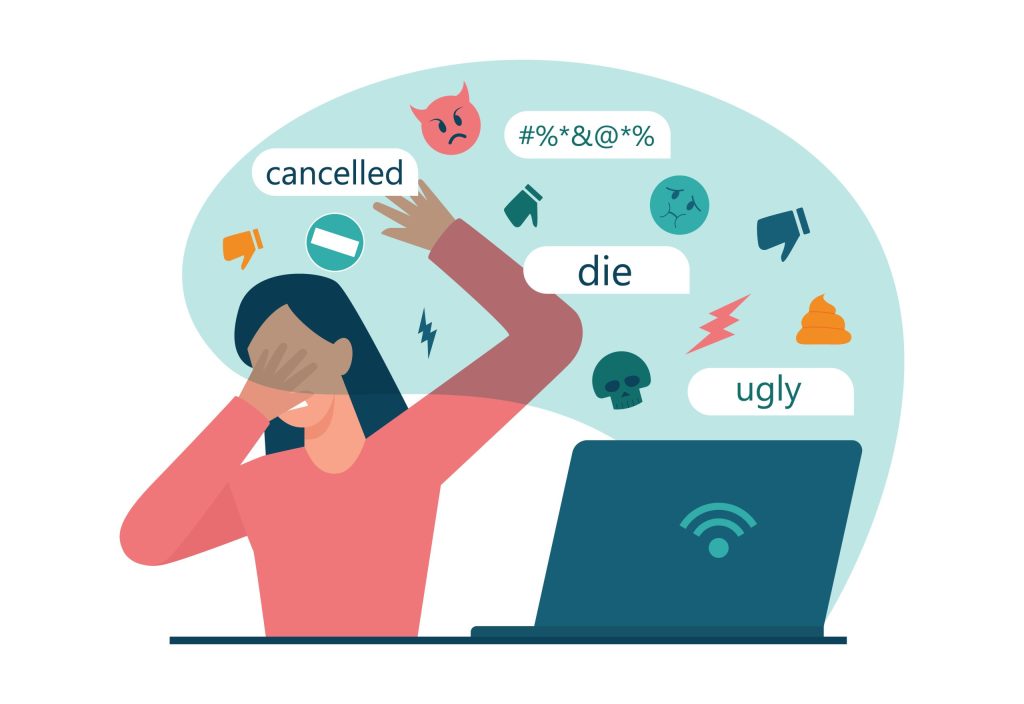
Classrooms are nothing like they used to be. They are no longer defined by four walls and a blackboard and socialising between peers isn’t limited to the gates of the school grounds. Socialisation continues at home, after hours, through the screens of devices in the form of sharing TikTok’s and Instagram reels, online gaming platforms and an endless supply of group chats. These screens then walk straight into schools the next morning, sitting in backpacks or on desks and any negative interaction from the night before weighing on the minds of those involve. The concept of cyber safety and cyberbullying isn’t new, however the increased integration of technology into the classroom means that a higher level of consideration needs to be placed on making young Australians aware of the risks. Version 9 of the Australian Curriculum acknowledges that digital life is no longer separate from school and works to equip students with the skills to effectively protect themselves, but the current statistic of cyberbullying in Australia begs the question- is it enough?
The Australian Curriculum recognises that online lives and school lives are now completely integrated and acknowledges the need for schools to help students navigate these intwined environments safely. Online safety content is integrated into multiple learning areas including Health and Physical Education and Digital Technologies and supports the development of students recognising online risks, behaving respectfully, managing their digital identifies and seeking help if required (Australian Curriculum, 2022). On paper this sounds like it would be strongly effective in minimizing the effects of cyberbullying however the evidence suggests that it is not.
The eSafety Cominssioners Cyberbullying report paints a confronting picture that it is not. According to the Snapshot, more than half of young Australians have experiences cyberbullying (Australian Government, 2025). This means more than 1 in 2 young Australians have been targeted online experiences that range from name-calling to exclusion to impersonation and trolling (Panda Security, 2024). These incidences are reported to mostly occur on online platforms including snapchat, online video games and online messenger platforms (Robertson, 2023). As many schools, including all Australian state schools, and many Catholic and independent schools ban the use of mobile phones during school, these incidents usually happen outside school hours (Ayoub, 2025). Teachers don’t see the bullying itself, instead they see the fallout; upset and anxious students, breakdown in friendship groups or isolation of students. So even though the bullying happens online, the impacts show up in the classroom- loud and clear.
The main limitation to the curriculum is that while it can teach the skills, awareness and strategies to prevent cyberbullying- it cannot control what happens after hours on a student’s phone or laptop. Technology doesn’t just enable bullying; but it amplifies it by making it persistent, public and difficult to escape. Once something is posted, it spreads fast and its digital foot print remains, even after it is deleted. So how does the Australian Curriculum address practising digital safety and wellbeing. It teaches students how to use online tools appropriately and ethically, recognise negative online behaviours and report them, and understand digital footprints, including its permanence(Australian Curriculum, 2022). Undoubtably, the curriculum covers the important foundational topic to online safety, however it cannot stop behaviours that occur outside of school nor can it prevent the emotional and physical consequences from entering the classroom.
Further, cyberbullying is constantly evolving- new apps, new trends and new ways to hurt people online, something that curriculum development cannot physically keep up with, given it takes years to review and update. While Version 9 of the Australian Curriculum is undoubtable more modern and clearer it can only cover general principles and cannot address every new platform or poor online behaviour that might emerge. These online poor behaviours are more likely effectively managed using a whole school approach to promoting social and emotional digital development with the goal of minimising cyberbullying and its effects in the classroom. Schools instead need strong policies, adequate teacher training, clear reporting systems and strong parent-teacher and student- teacher relationships. When students trust their teachers, they are more likely to report cyberbullying early, before it gets worse (Gao et al., 2024). A fact that explicitly substantiates the need for a supportive school culture.
So, can the Australian Curriculum prevent cyberbullying entering the classrooms? In black and white terms, no it cannot. But, appropriate education (which the curriculum allows) works strongly towards supporting students to understand the risk associated with online social activity. Cyberbullying is ever evolving and no curriculum will ever be able to keep up with the challenges of online life and prevent cyberbullying however if combined with strong whole- school approaches the curriculum can be utilized to make a real difference.
Cyberbullying Online Help: https://kidshelpline.com.au/teens/issues/cyberbullying
Cyberbullying Advice Sheets: https://www.vic.gov.au/advice-sheets-students
References:
Australian Curriculum. (2022). F-10 Curriculum | V9 Australian Curriculum. https://www.australiancurriculum.edu.au/f-10-curriculum/learning-areas/design-and-technologies/year-4?view=quick&detailed-content-descriptions=0&hide-ccp=0&hide-gc=0&load-detailed-content-descriptions=null&side-by-side=1&strands-start-index=0
Australian Government. (2025). How Common is Cyberbullying among Children in Australia. eSafety Commisioner. https://www.esafety.gov.au/research/the-online-experiences-of-children-in-australia/snapshot-cyberbullying
Ayoub, S. (2025, October 12). Two years after school phone bans were implemented in Australia, what has changed? The Guardian. https://www.theguardian.com/society/2025/oct/13/two-years-after-school-phone-bans-were-implemented-in-australia-whats-changed-the-impacts-were-clear
Cyberbullying Prevention and Response. (2022). Benderleadership. https://benderleadership.org/wp-content/uploads/2023/03/Cyberbullying-scaled.jpeg
Gao, L., Li, X., Wu, X., & Wang, X. (2024). Positive Teacher-Student relationships lead to less cyberbullying perpetration: a Within-Person perspective. Journal of Youth and Adolescence, 54(5), 1221–1237. https://doi.org/10.1007/s10964-024-02113-4
Panda Security. (2024, July 5). 21 Alarming Cyberbullying Statistics [2025] — Panda Security. Panda Security Mediacenter. https://www.pandasecurity.com/en/mediacenter/cyberbullying-statistics/
Robertson, T. (2023, May 25). Cyberbullying in Australia: Statistics & resources | ECU Online. https://studyonline.ecu.edu.au/blog/cyberbullying-australia-statistics-resources
 My Journey Through EDCU20042
